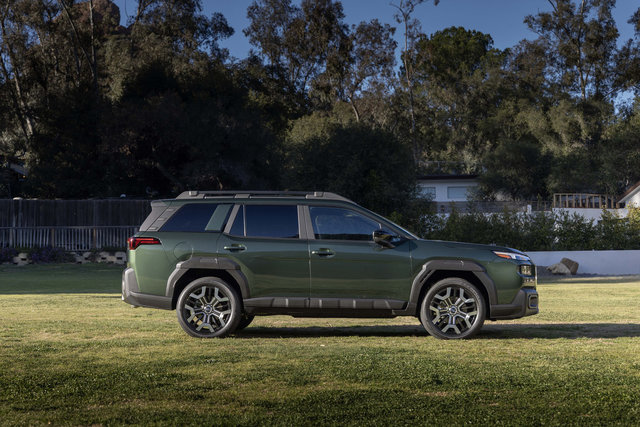
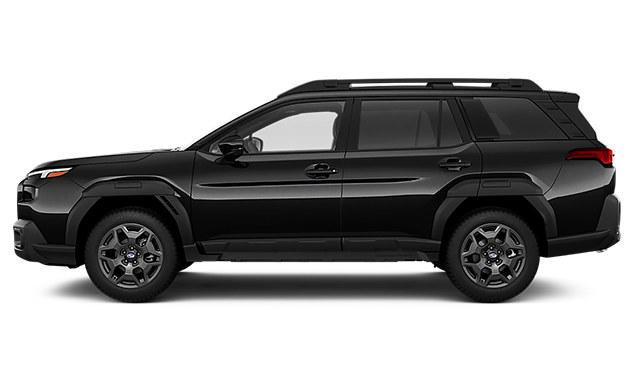
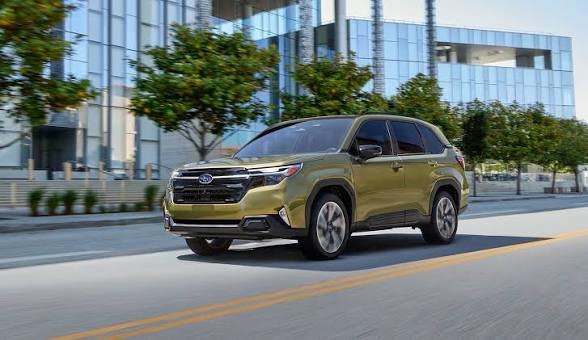
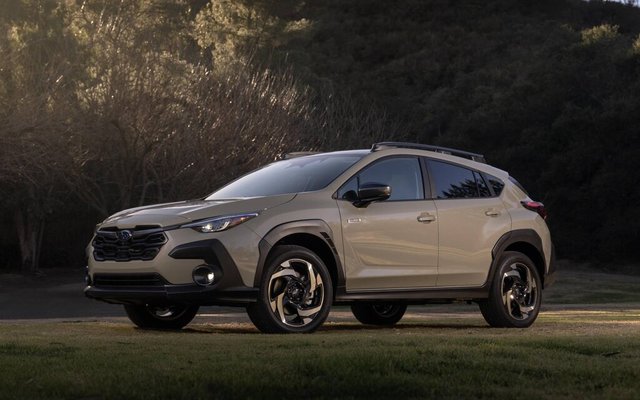
The 2026 Subaru Outback introduces a redesigned approach to Subaru's adventure-ready crossover, combining standard Symmetrical Full-Time All-Wheel Drive with updated technology, available turbocharged performance and the rugged capability of the Outback Wilderness.
For Canadian drivers comparing the 2026 Subaru Outback, this guide covers the available trims, engines, towing capacity, technology, AWD capability and key features to consider before choosing your Outback.
What's New for the 2026 Subaru Outback?
The 2026 Outback represents a major evolution of Subaru's long-running adventure vehicle.
Updates include a more SUV-inspired design, a new 12.1-inch touchscreen, a 12.3-inch digital gauge cluster, updated EyeSight driver-assistance technology and changes to the Outback's chassis and driving systems.
Subaru continues to make Symmetrical Full-Time All-Wheel Drive standard, maintaining one of the features that has helped make the Outback popular with Canadian drivers.
2026 Subaru Outback Trims in Canada
The Canadian 2026 Subaru Outback lineup is offered in four trims:
- Outback Touring
- Outback Limited XT
- Outback Wilderness
- Outback Premier XT
Each trim provides a different combination of performance, comfort, technology and off-road capability.
2026 Subaru Outback Price in Canada
Subaru Canada's current starting prices for the 2026 Outback lineup, including freight and fees but before applicable taxes, are:
| 2026 Outback Trim |
Starting Price |
Horsepower |
| Touring |
$43,685 |
180 hp |
| Limited XT |
$50,985 |
260 hp |
| Wilderness |
$51,985 |
260 hp |
| Premier XT |
$53,985 |
260 hp |
Pricing shown reflects Subaru Canada information available at the time of publication and includes freight and fees. Taxes are extra. Pricing and availability are subject to change.
2026 Subaru Outback Engines
Canadian Outback shoppers can choose between two SUBARU BOXER engine configurations depending on trim.
2.5-Litre SUBARU BOXER Engine
The Outback Touring uses a 2.5-litre direct-injection SUBARU BOXER engine producing 180 horsepower and 178 lb-ft of torque.
It is paired with Subaru's Lineartronic CVT and standard Symmetrical Full-Time All-Wheel Drive.
2.4-Litre Turbocharged SUBARU BOXER Engine
Limited XT, Wilderness and Premier XT models receive a 2.4-litre turbocharged SUBARU BOXER engine producing 260 horsepower and 277 lb-ft of torque.
The additional power can be particularly useful for highway passing, towing and drivers who simply prefer stronger acceleration.
Does the 2026 Subaru Outback Have AWD?
Yes. Every 2026 Subaru Outback sold in Canada comes standard with Subaru Symmetrical Full-Time All-Wheel Drive.
Unlike vehicles where AWD is an optional upgrade, Subaru's system is integrated into the Outback's drivetrain.
For drivers in Orillia, Barrie, Muskoka and throughout Central Ontario, standard AWD can be especially valuable when dealing with snow, changing weather and cottage-road conditions.
X-MODE with Hill Descent Control is also included, with the Wilderness receiving enhanced dual-function X-MODE for additional capability in low-traction conditions.
2026 Subaru Outback Towing Capacity
Towing capacity depends on the Outback trim and powertrain.
| Trim |
Maximum Braked Towing Capacity |
| Touring |
1,224 kg / approximately 2,698 lb |
| Limited XT |
1,588 kg / approximately 3,501 lb |
| Wilderness |
1,588 kg / approximately 3,501 lb |
| Premier XT |
1,588 kg / approximately 3,501 lb |
That gives the turbocharged Outback models additional flexibility for drivers towing appropriately equipped small trailers, recreational equipment or other loads.
Always confirm trailer weight, tongue weight and equipment requirements in the owner's manual before towing.
2026 Subaru Outback Wilderness
For drivers who prioritize capability, the 2026 Subaru Outback Wilderness is the most adventure-focused version of the lineup.
Wilderness features include:
- 260-hp turbocharged SUBARU BOXER engine
- 240 mm of ground clearance
- Enhanced dual-function X-MODE
- All-terrain tires
- 17-inch matte-black alloy wheels
- Adaptive dampers
- Heavy-duty roof rails
- Reinforced underbody protection
- Wilderness-specific interior and exterior details
Those upgrades make the Wilderness particularly interesting for drivers regularly travelling on rough cottage roads, unpaved surfaces or through deep winter conditions.
New 12.1-Inch Touchscreen
One of the most noticeable changes inside the 2026 Outback is its 12.1-inch touchscreen infotainment system.
The system supports features including wireless Apple CarPlay and Android Auto, while available configurations add features such as cloud-based navigation and premium Harman Kardon audio.
A wireless phone charger is also incorporated into the centre console.
12.3-Inch Digital Gauge Cluster
The touchscreen is paired with a 12.3-inch digital gauge cluster, giving the driver a modern digital display directly behind the steering wheel.
Together, the two displays represent one of the largest technology changes from the previous Outback generation.
2026 Subaru Outback EyeSight Safety Technology
The 2026 Outback continues Subaru's focus on driver assistance through EyeSight Driver Assist Technology.
Depending on trim and configuration, safety and driver-assistance technologies can include features such as:
- Pre-Collision Braking
- Adaptive Cruise Control
- Lane-related driver assistance
- Automatic Emergency Steering
- Emergency Stop Assist
- Reverse Automatic Braking
- Subaru Rear/Side Vehicle Detection
- DriverFocus Distraction Mitigation System
Driver-assistance systems are designed to support an attentive driver and do not replace safe driving practices.
Adaptive Dampers on the Outback Wilderness
The 2026 Outback Wilderness features adaptive electronic dampers designed to improve wheel and body control as road conditions change.
The suspension can adjust its behaviour according to vehicle movement and driving conditions, helping the Wilderness balance off-road capability with comfort during everyday driving.
How Much Cargo Space Does the 2026 Subaru Outback Have?
The Outback remains designed around passenger and cargo versatility. Subaru lists seating for five and a large rear cargo area with 60/40-split folding rear seats.
This flexibility allows the Outback to accommodate everything from groceries and sports equipment to luggage and outdoor gear.
The combination of passenger space, cargo flexibility, roof-rail capability and AWD is one of the reasons the Outback continues to work well for active Canadian households.
Which 2026 Subaru Outback Trim Should You Choose?
The best Outback depends largely on how you plan to use it.
- Touring: A strong choice for drivers who want the core Outback experience, standard AWD and the naturally aspirated 2.5-litre engine.
- Limited XT: Adds the stronger turbocharged engine along with additional comfort and technology.
- Wilderness: Best suited to drivers who prioritize ground clearance, rough-road capability and outdoor use.
- Premier XT: Designed for shoppers looking for the highest level of Outback comfort and equipment with turbocharged performance.
Is the 2026 Subaru Outback Good for Ontario Winters?
The Outback's combination of standard Symmetrical Full-Time AWD, X-MODE and generous ground clearance makes it particularly well suited to Canadian driving conditions.
Around Orillia and Central Ontario, drivers regularly encounter snow-covered roads, changing highway conditions and rural roads where additional traction and ground clearance can be useful.
Proper winter tires remain an important part of winter driving even with an all-wheel-drive vehicle.
2026 Subaru Outback Frequently Asked Questions
How much does the 2026 Subaru Outback cost in Canada?
Subaru Canada currently lists the 2026 Outback Touring starting at $43,685 including freight and fees before taxes. Limited XT, Wilderness and Premier XT models are priced higher based on equipment and powertrain.
Is the 2026 Subaru Outback AWD?
Yes. Subaru Symmetrical Full-Time All-Wheel Drive is standard across the Canadian 2026 Outback lineup.
How much horsepower does the 2026 Subaru Outback have?
The Outback Touring produces 180 horsepower from its 2.5-litre BOXER engine. Limited XT, Wilderness and Premier XT models use a turbocharged 2.4-litre BOXER engine producing 260 horsepower.
How much can the 2026 Subaru Outback tow?
The Touring has a maximum braked towing capacity of 1,224 kg (approximately 2,698 lb), while Limited XT, Wilderness and Premier XT models are rated up to 1,588 kg (approximately 3,501 lb) when properly equipped.
Does the 2026 Subaru Outback have Apple CarPlay?
Yes. The 2026 Outback's infotainment system supports wireless Apple CarPlay and Android Auto.
How much ground clearance does the 2026 Outback Wilderness have?
Subaru Canada lists the 2026 Outback Wilderness with 240 mm of ground clearance.
What are the 2026 Subaru Outback trims in Canada?
The Canadian lineup consists of Touring, Limited XT, Wilderness and Premier XT.
What's the difference between Outback Touring and Limited XT?
One of the biggest differences is the powertrain. Touring uses the 180-hp 2.5-litre BOXER engine, while Limited XT receives the 260-hp turbocharged 2.4-litre BOXER engine. Limited XT also adds additional comfort and technology equipment.
Shop the 2026 Subaru Outback in Orillia
The 2026 Subaru Outback combines standard all-wheel drive, flexible cargo space, modern technology and available turbocharged performance in a vehicle designed for Canadian driving.
Drivers in Orillia, Barrie, Simcoe County and Muskoka can explore available Subaru Outback models at Subaru of Orillia.
Explore the 2026 Subaru Outback
View current Subaru inventory at Subaru of Orillia and find the Outback trim that fits your driving needs.
VIEW NEW SUBARU INVENTORY
Vehicle specifications, features, pricing and availability are subject to change. Towing capacity depends on vehicle configuration, equipment and trailer requirements. Always consult Subaru Canada and the vehicle owner's manual for current specifications and towing requirements.